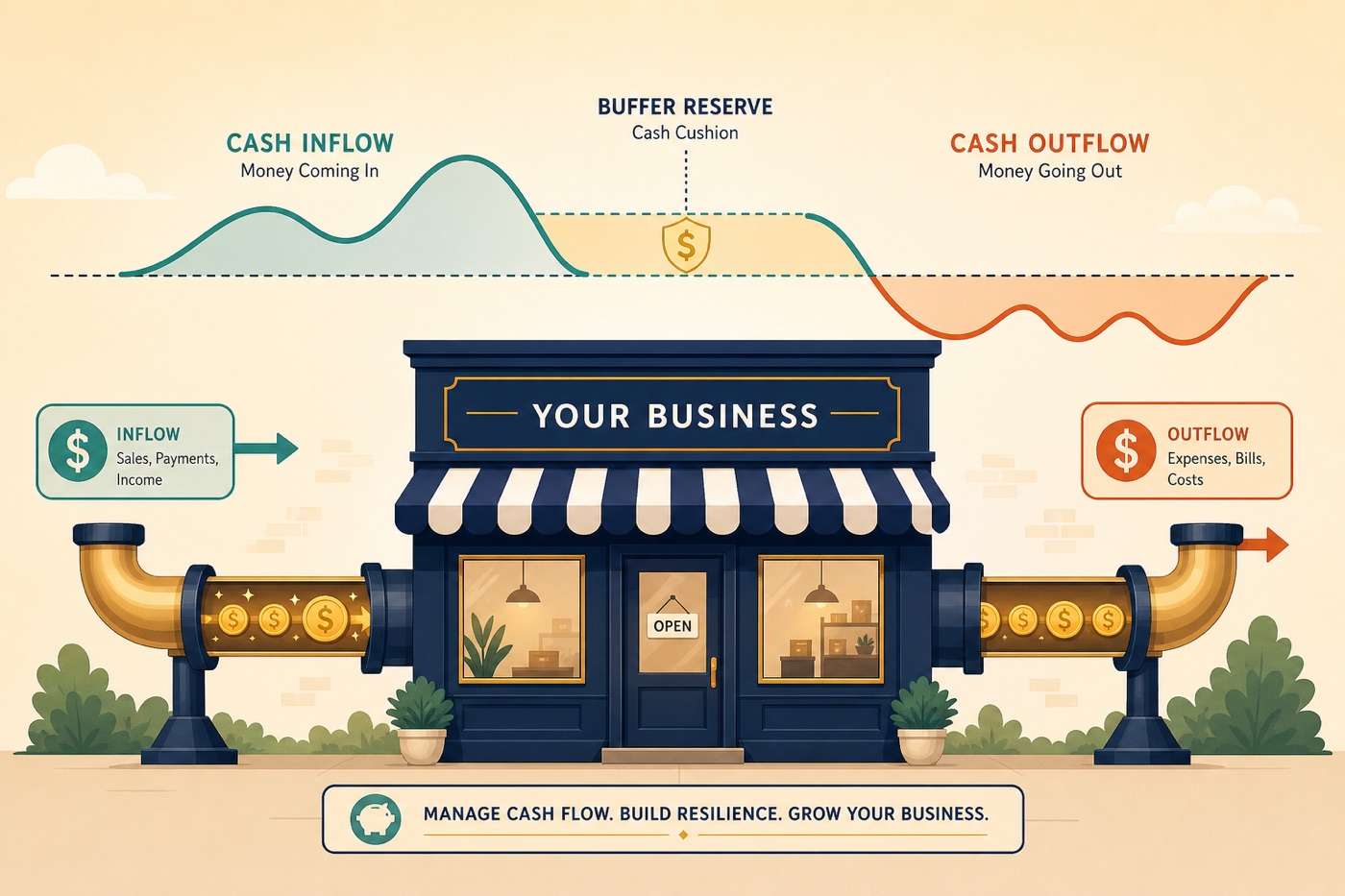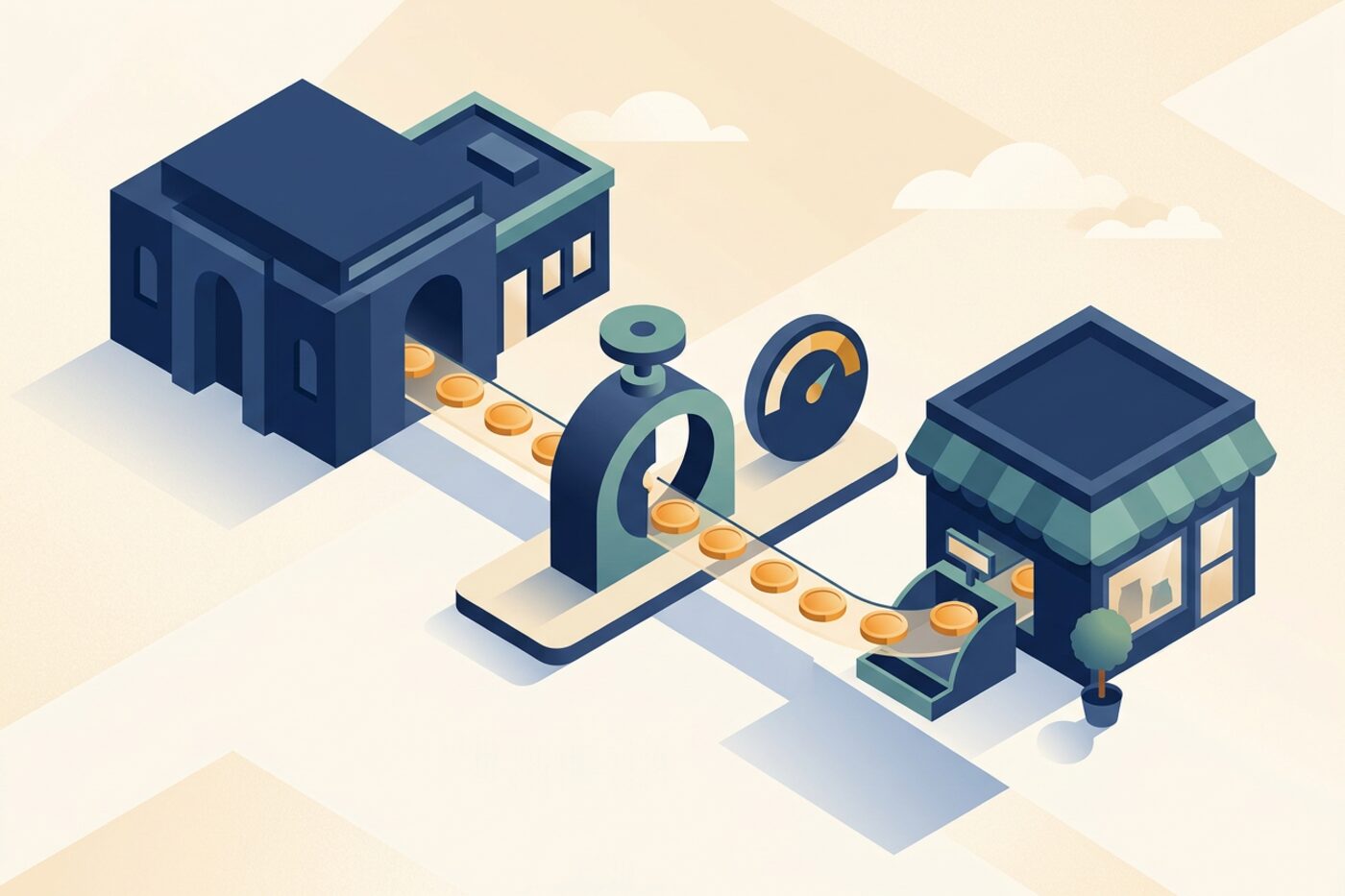
A client I worked with years ago had a line of credit sitting unused for over a year, paying a small annual fee to keep it open, and considered canceling it to save the cost. Two months later a large client payment landed six weeks late and payroll was due regardless. The line of credit covered the gap in an afternoon, at a fraction of the stress and cost of scrambling for a same-week loan or missing payroll. That’s the entire case for having one before you need it: the value isn’t in using it constantly, it’s in having it available on the one occasion timing genuinely turns against you.
Lines of credit and overdraft facilities get lumped together in casual conversation, but they’re structured differently, cost differently, and suit different situations. Knowing which one fits which gap is worth understanding before a cash crunch forces the decision.
A business line of credit, in plain terms
A line of credit is a pre-approved borrowing limit you can draw against whenever you need to, up to that limit, and repay on your own schedule, similar in spirit to a credit card but usually with a lower interest rate and a higher limit for a qualifying business. You only pay interest on the amount actually drawn, not the full limit, which is what makes it a reasonable thing to have open and unused – the cost of availability, if there’s a fee at all, is typically small compared to the cost of not having access when you need it.
It’s a good fit for gaps you can see coming even if you can’t predict exactly when: a seasonal business bridging a slow quarter, a service business waiting on invoices with long payment terms, or general working capital smoothing that doesn’t map to one specific event. Because the funds revolve – available again as you repay – it’s built for repeated, temporary use rather than a single large purchase you’ll pay off over years.
Overdraft protection, and why it’s a different tool
An overdraft facility attaches to your existing business checking account and allows the balance to go negative, up to an agreed limit, rather than bouncing a payment when the account runs dry. It’s typically smaller in scale than a line of credit, faster to trigger since it happens automatically at the point a payment would otherwise fail, and often carries a higher effective cost per dollar borrowed if you rely on it for more than very short, occasional gaps.
Where it earns its place is as a last-resort buffer against a same-day surprise – a payment clearing a day earlier than expected, a deposit landing a day later – not as a standing source of working capital. Relying on an overdraft every month as if it were a line of credit is usually a sign of a structural cash flow problem worth addressing directly, since the cost of doing it that way compounds faster than most business owners expect once you annualize the fees.
What lenders actually look at
Qualifying for a meaningful line of credit generally depends on factors that take time to build, so this is worth thinking about well before you need one:
- Time in business and revenue history. Most lenders want to see a track record, often a minimum of one to two years of operating history and consistent revenue, before extending a sizable line.
- Business and personal credit. Especially for newer businesses, a lender may weigh the owner’s personal credit history alongside the business’s own, since the two are harder to separate early on.
- Existing cash flow documentation. Bank statements and, ideally, a cash flow forecast demonstrate that you understand your own timing gaps rather than asking for credit reactively.
The practical implication is that the best time to apply for a line of credit is when your business doesn’t urgently need one – approval is easier, terms are typically better, and you’re negotiating from a position where “no” doesn’t create an immediate problem.
Reading the actual cost before you sign
Both products come with terms worth reading closely before treating either as a solved problem. Variable interest rates, draw fees, annual maintenance fees, and how interest compounds if a balance carries for multiple months can all differ meaningfully between offers that look similar on the surface. It’s worth comparing the annual percentage rate rather than just the headline interest figure, since the APR is intended to capture fees alongside the base rate into one comparable number. The U.S. Small Business Administration has a clear overview of financing options, including lines of credit, and what lenders typically require: sba.gov. Rules, product names, and typical terms vary by country, so if you’re outside the US, your national small business support agency or a business banking advisor is the right place to compare what’s actually on offer locally.
Used deliberately, both tools do the same underlying job: buying you time when cash timing and cash need don’t line up. Used as a permanent patch for a business that’s structurally short on cash every month, either one becomes an expensive way to delay a conversation about pricing, terms, or costs that needs to happen anyway.